The Best Battery-Operated Heated Blankets to Pack on Your Next Camping Trip
KayWoot KayWootThe best battery-operated heated blankets for camping use low-voltage power (5V, 7V, or 12V) delivered by portable power banks or rechargeable lithium packs to provide cordless warmth off the grid. Top models feature multi-zone carbon-fiber heating elements, water-resistant ripstop shells, automatic shut-off timers, and runtimes ranging from 3 to 8.5 hours, with peak temperatures between 110°F and 158°F depending on voltage. Whether you are backpacking, car camping, or lounging fireside, a battery-powered heated throw eliminates the need for heavy power stations or noisy inverters.
KayWoot shoppers often build their camping kits around comfort, personality, and practical accessories: a warm graphic hoodie, a favorite camp mug, a packable throw, and the right cold-weather gear for the trip. If your campsite style includes cozy layers and off-grid lounging, a battery operated heated blanket for camping can be a useful companion to your outdoor apparel and blanket setup. This guide explains how cordless heated throws work, what features matter, and how to pair them with the kind of travel, RV, and home-comfort accessories KayWoot customers already love.
Why Choose a Battery Operated Heated Blanket for Camping Over Plug-In Models?
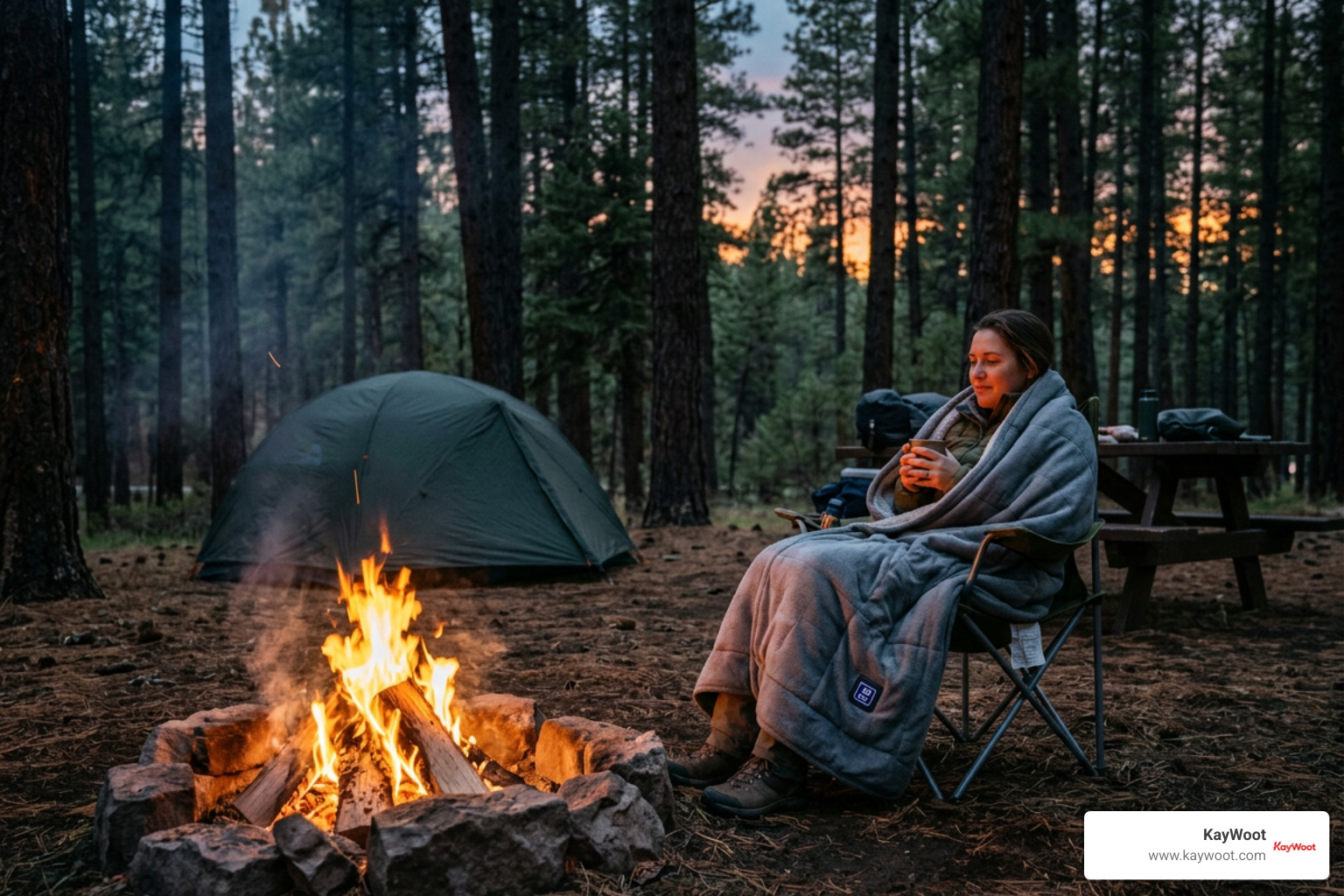
A battery operated heated blanket for camping delivers cordless warmth off the grid using safe, low-voltage direct current (5V, 7V, or 12V) powered by portable power banks or rechargeable lithium packs. The best camping models feature multi-zone carbon-fiber heating, water-resistant ripstop shells, automatic shut-off timers, and runtimes ranging from 3 to 8.5 hours. Unlike traditional 110V/120V AC household electric blankets that require heavy power stations or noisy inverters, low-voltage cordless blankets provide targeted heat inside tents, sleeping bags, or around campfires without needing an electrical grid. Whether you are backpacking, car camping, or styling a laid-back campsite with expressive layers and accessories, outdoor enthusiasts gearing up for adventure find that low-voltage heating gear provides immediate warmth safely and efficiently.
Cordless Freedom in the Backcountry
The primary appeal of a cordless heated blanket is absolute mobility. Instead of staying chained to a single corner of your tent or an RV outlet, you can wrap a battery-powered throw around your shoulders while brewing your morning coffee, relaxing in camp clothes, or sitting by the campfire.
These blankets use ultra-thin, flexible conductive thread elements or carbon-fiber micro-wires woven seamlessly between durable fabric layers. Because the power pack sits directly inside a dedicated, zippered stash pocket on the blanket, your heat source moves wherever you go.
Power Efficiency and Low-Voltage Safety
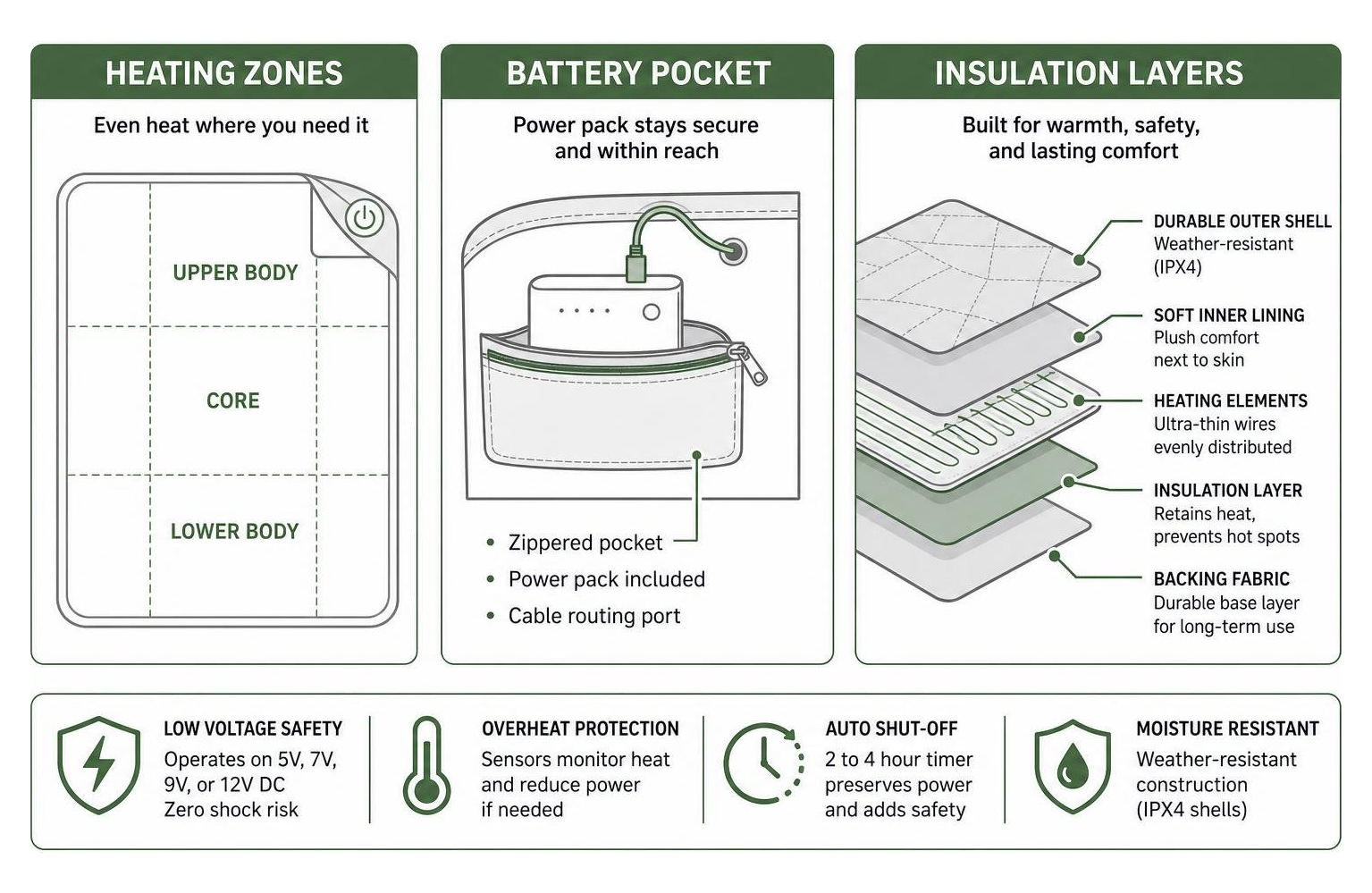
Safety is a critical factor when bringing heating elements inside a tent or sleeping bag. Traditional electric blankets carry risks of short circuits or severe overheating if folded or crushed under your body weight. Battery-powered camping blankets reduce these worries by operating on low-voltage direct current (typically 5V, 7V, 9V, or 12V).
Low-voltage systems cannot deliver the same level of shock risk as household-current blankets, even if light moisture reaches the outer fabric. Leading manufacturers also integrate multi-stage safety controllers that feature:
- Overheat protection sensors that throttle wattage if the blanket gets bunched up.
- Automatic shut-off timers (typically 2 to 4 hours) to preserve power and prevent thermal runaway.
- High-density insulation that prevents hot spots and shields the heating wires from bending fatigue.
For rugged setups requiring robust vehicle integration, technical designs like the 12V USB Heating Blanket for Cars allow campers to plug directly into standard vehicle sockets during transit while providing regulated, timer-controlled warmth during rest stops.
Key Features to Compare in a Portable Heated Blanket
Not all portable heated throws perform equally in freezing conditions. Choosing the right model requires balancing battery runtime, voltage, fabric durability, and packability. For KayWoot customers who already shop for cozy apparel, expressive gifts, mugs, and home accessories, the best heated camping blanket is the one that fits naturally into a broader comfort kit: warm layers, insulated bedding, and easy-to-pack campsite essentials.
| Specification / Model | Voltage & Power Draw | Battery Capacity | Runtime Range (Low to High) | Dimensions & Weight | Temperature Range |
|---|---|---|---|---|---|
| Gobi Heat Zen | 12V USB-C / ~35W | 20,000 mAh included | 3.5 hrs (High) - 8.5 hrs (Low) | 70" x 50" / 3.75 lbs | 116°F to 136°F |
| ActionHeat Plush Throw | 7V / ~15W | 5,000 mAh included | 2.5 hrs (High) - 6.5 hrs (Low) | 60" x 50" / 3.2 lbs | 120°F to 150°F |
| Ignik Topside | 12V / up to 48W | Requires external 12V supply | Varies by battery bank capacity | 72" x 52" / 3.6 lbs | 85°F (5V) to 140°F (12V) |
| Traverseon USB Wearable | 5V / 10W | Requires standard USB bank | ~4 hrs (on 10,000 mAh bank) | 59" x 31" / 1.6 lbs | ~100°F to 125°F |
| KingCamp Heated Nimbus | 9V / 18W (9V/2A) | Requires 9V/2A power bank | ~3 to 6 hrs (on 20,000 mAh) | 78.7" x 57.1" / 3.53 lbs | 104°F to 131°F |
| Zonli Ourea 12V | 12V / ~30W | 20,000 mAh included | 2.5 hrs (High) - 6.0 hrs (Low) | 70" x 51" / 3.8 lbs | 122°F to 158°F |
Voltage, Heat Output, and Battery Capacity
Voltage directly dictates how hot the blanket gets and how fast it warms up:
- 5-Volt USB Systems: The most accessible and lightweight option. Operating at 2A to 2.4A (roughly 10W to 12W), these blankets provide gentle warmth up to 110°F-125°F. They run on everyday phone power banks, making them ideal for chilly summer evenings or layering inside an already rated sleeping bag.
- 7-Volt Systems: Popularized by outdoor heated apparel brands, 7V systems generate robust warmth (up to 130°F-150°F) using proprietary slim lithium-ion packs. They strike a great balance between heating power and portability.
- 12-Volt Systems: The powerhouse category. Delivering up to 48W to 72W of heat, 12V systems can reach temperatures over 140°F in seconds using FAR infrared and carbon-fiber elements. These require high-capacity 12V batteries (such as 20,000 mAh lithium-polymer packs or 500Wh portable power stations) and represent the gold standard for sub-freezing vehicle and tent camping.
For extreme backcountry performance, specialized vehicle-ready setups such as the Topside Heated Blanket feature dual-mode operation, switching between 5V USB comfort warmth and full 48W maximum output when connected to a 12V power supply.
Fabric Durability, Water Resistance, and Maintenance
Outdoor blankets encounter rough surfaces, dirt, pine needles, and spilled drinks. When comparing materials, look for a dual-sided construction:
- Weatherproof Outer Shell: A 20D or 40D ripstop nylon shell with a durable water repellent (DWR) finish or IPX4 water-resistance rating prevents moisture, morning dew, and wind from penetrating the heating elements.
- Thermal Retentive Lining: Plush micro-fleece, Arctic fleece, or 220g/m2 Sherpa fabric traps radiant heat next to your body. Hollow-fiber thermal fills help retain warmth even if your battery runs out mid-trip.
A heated blanket does the active warming, while a non-heated throw, hoodie, or soft camp layer helps trap that warmth. That makes battery blankets especially useful alongside the cozy apparel and home-comfort accessories that KayWoot customers often pack for cabins, RV weekends, bonfire nights, and casual outdoor gatherings.
Cleaning modern battery blankets is straightforward. Disconnect and remove the battery pack, seal the waterproof cap over the internal USB/barrel connector, place the cable in its dedicated zippered pocket, and wash the blanket on a gentle cycle in cold water (30°C or lower). Always hang or line dry your blanket to preserve the internal wiring matrix.
Top Styles of the Battery Operated Heated Blanket for Camping
The portable heating market has expanded well beyond standard living room throws. Depending on how you travel, several distinct designs stand out. The right style should match both your campsite routine and your personal comfort setup, whether that means a graphic sweatshirt, a hot drink mug, a soft throw, or an RV-ready lounge space.
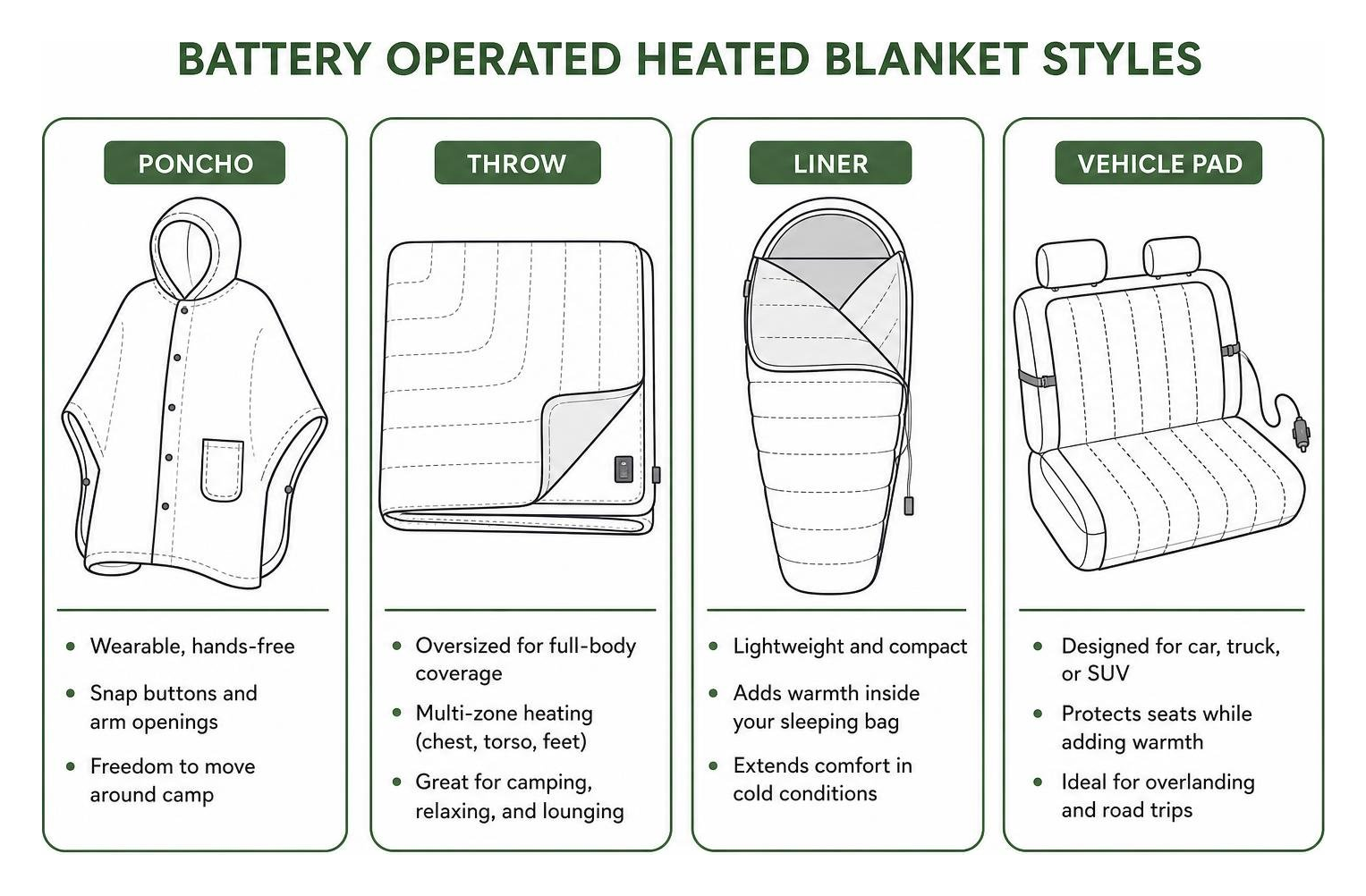
- Wearable Ponchos and Shawls: Outfitted with snap buttons, zippered armholes, and magnetic clasps, these models transform into a hands-free cape. Options like the Heated Blanket Wearable USB-Powered Throw allow you to move freely around camp while keeping core body zones heated.
- Oversized Multi-Zone Throws: Measuring roughly 70" x 50" or larger, models such as the Ourea Battery Operated Heated Blanket for Outdoor Use feature multiple independent heating zones across your chest, torso, and feet.
- Modular Multi-Panel Wraps: Versatile large-format designs like the HEATED NIMBUS Blanket incorporate 4-zone heating, 9V/2A low-voltage power compatibility, and edge snaps that let you connect two blankets together to cover a double sleeping pad.
- Plush Infrared Blankets: Premium throws such as the ActionHeat 7V Battery Heated Plush Throw Blanket use carbon-fiber FAR infrared elements that penetrate deep muscle tissue to restore warmth quickly after a long day on the trail.
For road trippers and camper van travelers, choosing larger 12V throws that integrate with both house batteries and 12V auxiliary vehicle plugs provides maximum comfort during long off-grid excursions.
Integrated Battery Blankets vs. External Power Bank Systems
When shopping, you will encounter two primary power designs:
- Included Proprietary Battery Packs: Blankets that include dedicated batteries (such as 7V or 12V custom packs) are ready to use out of the box. They are calibrated to deliver maximum voltage and exact runtimes, though replacement packs can be pricey.
- Open-Source USB/Power Bank Compatible Blankets: Blankets designed with a standard USB-A or USB-C input cable let you supply your own power banks. This setup offers incredible versatility; if your battery drains, simply swap in a fresh power bank from your backpack.
For gift buyers, USB-compatible blankets can be easier to match with the power banks and travel accessories someone already owns. Proprietary systems can be better for campers who want a complete, purpose-built heated blanket kit without mixing parts.
Best Use Cases: Tent Sleeping, RVing, and Campfires
- Tent Sleeping: Place the heated blanket inside your sleeping bag or on top of your sleeping pad as a heated mattress topper. Pre-heating your bedding for 15 minutes before climbing in eliminates that initial cold shock.
- Campfire Lounging: Drape a water-resistant heated throw over your camp chair. Sitting on the heating elements shields your back from cold drafts while you enjoy the fire.
- RV and Cabin Downtime: Use a low setting while reading, sipping coffee, or relaxing in layered camp apparel so you can stay comfortable without turning up the main heater.
- Emergency Roadside Preparedness: Keeping a compact heated blanket and a charged power bank in your vehicle glove compartment provides life-saving warmth during winter breakdowns or unexpected mountain snowstorms.
How to Maximize Battery Life in Sub-Zero Weather
Sub-freezing temperatures cause lithium-ion and lithium-polymer batteries to lose voltage rapidly due to sluggish internal chemical reactions. To get the most heating time out of your gear during freezing nights, use these field-tested outdoor strategies:
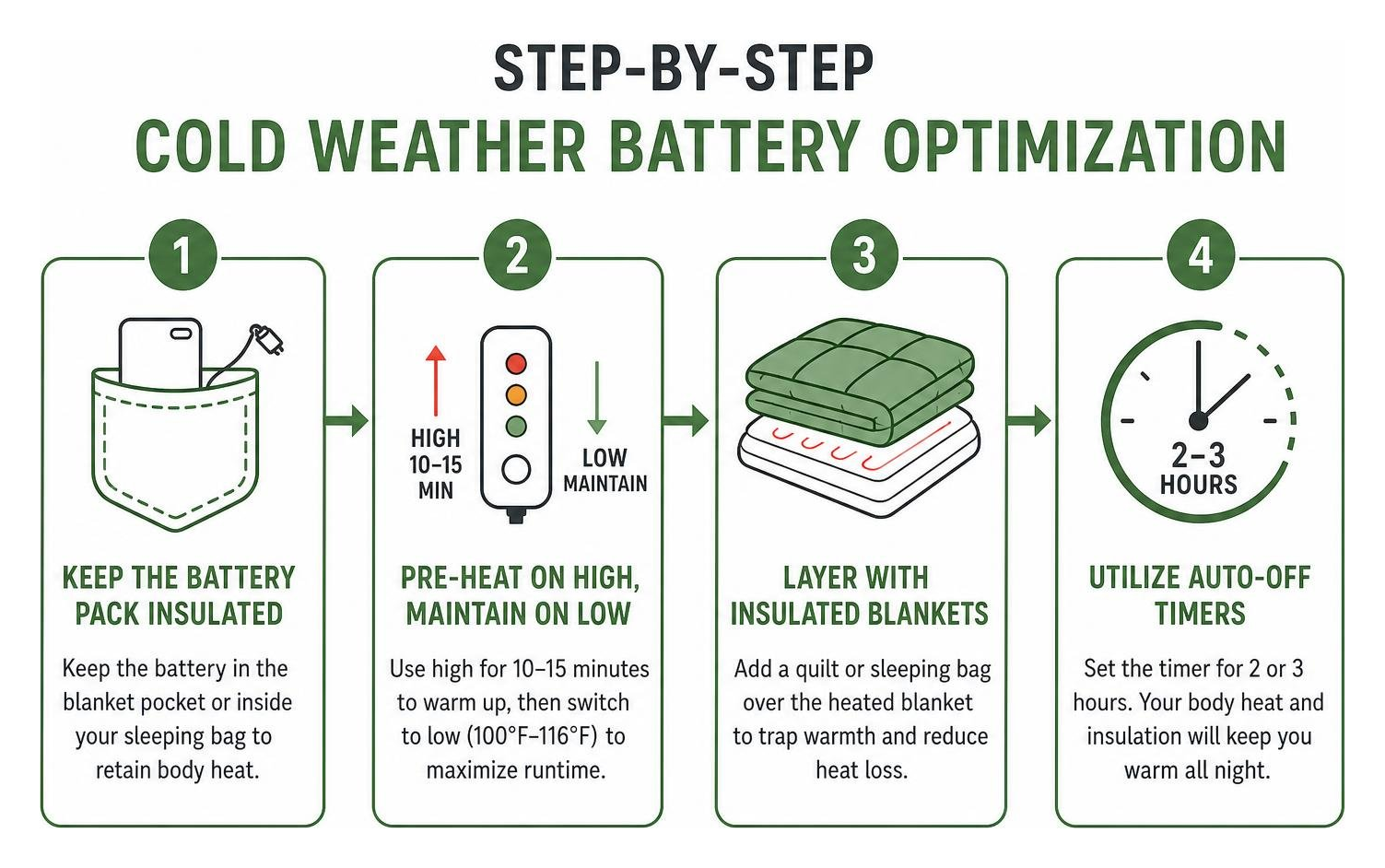
- Keep the Battery Pack Insulated: Never leave your power bank exposed to the open, freezing tent floor. Keep the battery tucked inside the blanket's insulated stash pocket, or route an extension cable so the battery rests inside your sleeping bag next to your body heat.
- Pre-Heat on High, Maintain on Low: Turn your blanket onto its highest setting for 10–15 minutes before going to sleep to warm up the trapped air inside your bedding. Once you climb inside, dial the controller down to the lowest setting (100°F–116°F) to stretch battery life from 3 hours up to 8+ hours.
- Layer with Insulated Blankets: A heated blanket produces radiant thermal energy, but thin fabrics allow that warmth to escape into cold tent air. Layer a secondary puffy quilt or sleeping bag directly over the heated blanket to trap heat efficiently.
- Utilize Auto-Off Timers: Set your blanket's integrated timer for 2 or 3 hours. Once you fall asleep, your body heat and the trapped thermal insulation within your sleeping system will maintain your core temperature throughout the night without draining the battery.
Frequently Asked Questions
Are battery-powered heated blankets safe to use overnight inside a tent?
Yes. Unlike standard 120V household electric blankets, battery-operated camping blankets run on low-voltage direct current (5V, 7V, 9V, or 12V). This low-voltage setup eliminates the risk of electrical shock. Furthermore, quality outdoor heated blankets incorporate automatic shut-off timers, thermal fuses, and overheat protection sensors. Ensure your tent has adequate baseline ventilation to avoid interior condensation, and avoid bunching the heating elements tightly under heavy, unyielding loads.
How long does a portable heated blanket battery typically last on a single charge?
Runtimes range between 3 and 8.5 hours depending on several factors:
- Heat Setting: High heat draws maximum wattage and typically drains batteries in 2.5 to 3.5 hours. Low heat settings stretch runtime to 6 to 8.5 hours.
- Battery Capacity: A standard 10,000 mAh power bank powers a 5V blanket for roughly 3–4 hours, while a 20,000 mAh lithium pack can power multi-zone 12V blankets for up to 6–8.5 hours on low.
- Ambient Air Temperature: Extreme sub-zero temperatures reduce battery efficiency unless the battery pack is kept insulated inside the blanket pocket.
What is the price range for a reliable outdoor heated blanket?
Outdoor heated blankets span three pricing tiers:
- Budget ($10 – $45): Entry-level 5V USB heating throws and fleece pads. These rely on external power banks and provide mild supplemental warmth.
- Mid-Range ($50 – $120): Durable, weather-resistant outdoor throws featuring integrated 7V or 9V battery systems, soft Sherpa linings, multi-panel warmth, and dedicated power controllers.
- Premium ($130 – $240+): Rugged 12V off-grid blankets built with high-wattage carbon-fiber heating arrays, 20,000 mAh power packs, heavy-duty DWR ripstop shells, and multi-zone digital temperature control.
Conclusion
Investing in a portable heated blanket transforms cold-weather camping from an endurance test into a cozy, restful retreat. By matching the right voltage system to your camping style, whether a lightweight 5V USB throw for breezy trail nights or a heavy-duty 12V multi-zone blanket for sub-zero car camping, you can customize your warmth wherever your travels take you.
For KayWoot customers, the goal is not just staying warm; it is building a campsite that feels personal, comfortable, and fun. Pairing quality heated gear with premium outdoor throw blankets, expressive apparel, and giftable camp accessories helps you stay shielded from harsh winds, damp evening air, and chilly morning breezes. Pack smart, keep your batteries insulated, and enjoy warm, cordless comfort on your next wilderness adventure.